




5 out of 5 stars based on 700+ reviews
¿Qué es una elevación de seno?
Una elevación de seno, a menudo conocida como aumento de seno, es un procedimiento especializado de injerto óseo diseñado para aumentar la cantidad de hueso en el maxilar superior. En Love Your Jaws, realizamos este procedimiento para asegurar que los pacientes con pérdida ósea en las áreas premolar o molar tengan una base estable y duradera para los implantes dentales.
¿Por qué necesito una elevación de seno?
Los senos maxilares son cavidades llenas de aire situadas detrás de las mejillas y directamente encima de los dientes superiores. En una mandíbula sana, las raíces de los dientes superiores están ancladas en hueso grueso. Sin embargo, varios factores pueden comprometer esta estructura:
- Anatomía natural: Algunas personas simplemente tienen senos más grandes o mandíbulas más delgadas.
- Pérdida de dientes: Cuando se pierden los dientes superiores, el cuerpo comienza naturalmente a reabsorber el hueso que los sostenía, lo que lleva a una pared delgada entre la boca y el seno.
- Enfermedad periodontal: La enfermedad crónica de las encías puede destruir el tejido óseo necesario para la salud dental.
Dado que los implantes dentales requieren una profundidad y densidad ósea específicas para permanecer seguros, la colocación de un implante en una pared sinusal delgada a menudo es imposible sin intervención.
Cómo funciona el aumento de seno
El objetivo de una elevación de seno es «levantar» el suelo del seno para hacer espacio para el crecimiento de hueso nuevo. Durante el procedimiento, nuestro experimentado cirujano oral mueve suavemente la membrana sinusal hacia arriba y rellena el espacio con material de injerto óseo.
Durante varios meses, este material se integra con su hueso natural, creando un «reborde» resistente que puede soportar la presión de un implante dental. Este procedimiento es una de las técnicas de injerto óseo más comunes y exitosas utilizadas en la odontología restauradora moderna.
¿Soy candidato para un procedimiento de elevación de seno?
Puede ser necesaria una elevación de seno si usted:
- ha perdido más de un diente en la parte posterior del maxilar
- ha perdido una cantidad significativa de hueso en la parte posterior del maxilar
- ha perdido dientes debido a un defecto congénito o afección
- ha perdido la mayoría de los dientes maxilares y requiere soporte para implantes dentales
¿Cómo se realiza una elevación de seno?
Lo más habitual es realizar una pequeña incisión en la región premolar o molar para exponer el hueso maxilar. Se corta una pequeña abertura en el hueso y se empuja hacia arriba la membrana que recubre el seno. El espacio subyacente se rellena con material de injerto óseo, ya sea del propio cuerpo del paciente o de otras fuentes. A veces se utilizan materiales sintéticos que imitan la formación ósea. Después de implantar el hueso, se sutura la incisión y comienza el proceso de cicatrización. Tras varios meses de cicatrización, el hueso pasa a formar parte del maxilar del paciente y los implantes dentales pueden insertarse y estabilizarse en el hueso del seno recién formado.
Si hay suficiente hueso disponible entre la cresta del maxilar superior y la parte inferior del seno para estabilizar suficientemente el implante, la elevación de seno y la colocación del implante pueden realizarse a veces como un único procedimiento. Si no hay suficiente hueso disponible, primero deberá realizarse la elevación de seno y después el injerto deberá madurar durante varios meses, dependiendo del tipo de material de injerto utilizado. Una vez que el injerto haya madurado, se pueden colocar los implantes.
El injerto de seno hace posible que muchos pacientes puedan tener implantes dentales cuando anteriormente no tenían otra opción que llevar dentaduras postizas sueltas.
La elevación de seno se realiza generalmente en la consulta del Dr. Dimitrov, bajo anestesia local. Algunos pacientes pueden solicitar también medicación sedante oral o intravenosa.
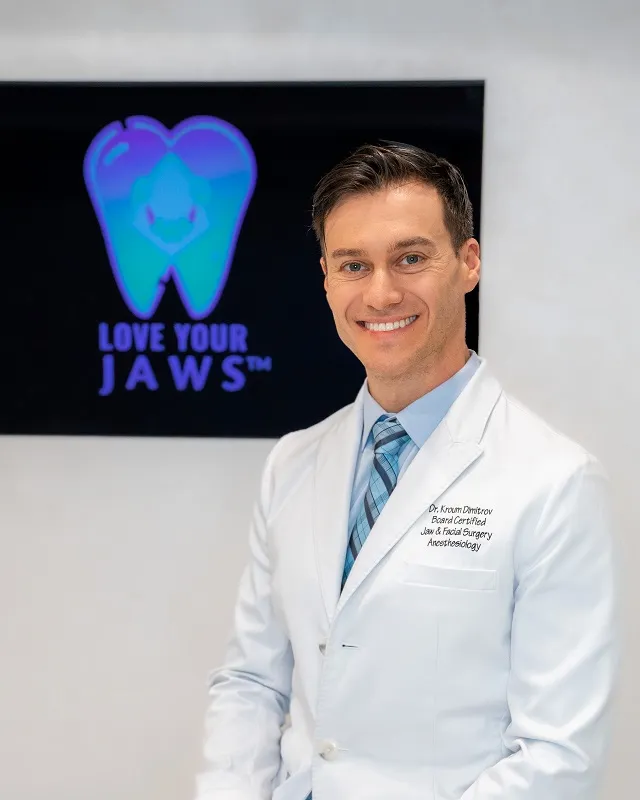
Meet Dr. Kroum Dimitrov.
Professor's Cup Award recipient - recognized for academic and surgical excellence.
Dr. Dimitrov is one of the few dual-certified specialists in Miami-Dade - holding board certifications in both Oral & Maxillofacial Surgery (ABOMS) and Anesthesiology. This combination means a single trusted expert oversees every aspect of your care, from your first consultation through your recovery follow-up.
When you're at Love Your Jaws, you're treated by the doctor - not handed off to an associate or a rotating staff member. Every procedure - from a single wisdom tooth to a full-arch reconstruction - is personally performed by Dr. Dimitrov in our Miami surgery center.
- Board Certified by American Board of Oral and Maxillofacial Surgery (ABOMS)
Board Certified by National Dental Board of Anesthesiology (NDBA)
- Hospital privileges: Baptist Hospital · Doctors Hospital
- Trained: University of Miami / Jackson Memorial Hospital, Chief Resident
- AAOMS Member · ADSA Member