




5 out of 5 stars based on 700+ reviews
Floor of the Mouth Cancer Treatment in Miami
Cancer in the floor of the mouth is a serious oral cancer condition that requires early diagnosis, precise biopsy, expert surgical planning, and coordinated treatment. The floor of the mouth is the soft tissue area beneath the tongue, close to important nerves, salivary ducts, glands, muscles, and the lower jaw. Because this area plays an essential role in speech, swallowing, tongue movement, and oral function, any suspicious lesion under the tongue should be evaluated quickly.
At Love Your Jaws, we provide advanced evaluation and oral surgery care for patients with suspected or confirmed floor of the mouth cancer in Miami. Led by Dr. Kroum Dimitrov, one of the leading oral surgeons in Miami, our team focuses on early detection, accurate diagnosis, and personalized treatment planning designed to protect both health and quality of life.
Patients searching for a floor of mouth cancer surgeon in Miami often need more than a routine exam. They need an experienced oral and maxillofacial surgery team that understands oral pathology, biopsy procedures, floor of mouth anatomy, cancer staging, reconstruction, and coordinated head and neck cancer care.
What Is the Floor of Mouth Cancer?
Floor of the mouth cancer develops in the tissues beneath the tongue. This area includes delicate soft tissues, salivary ducts, sublingual glands, muscles, nerves, and nearby jawbone structures. Because the floor of the mouth is thin and highly connected to deeper oral structures, suspicious lesions in this region should never be ignored.
The most common type is floor of mouth squamous cell carcinoma, and most mouth cancers begin in thin, flat cells lining the oral cavity; the exact type of mouth cancer depends on where cancer starts, though oral cavity cancer may also arise in nearby areas such as the buccal mucosa of the inner cheek or the hard palate. A Carcinoma of the floor of the mouth may appear as a white or red patch, ulcer, lump, thickened area, or sore that does not heal.
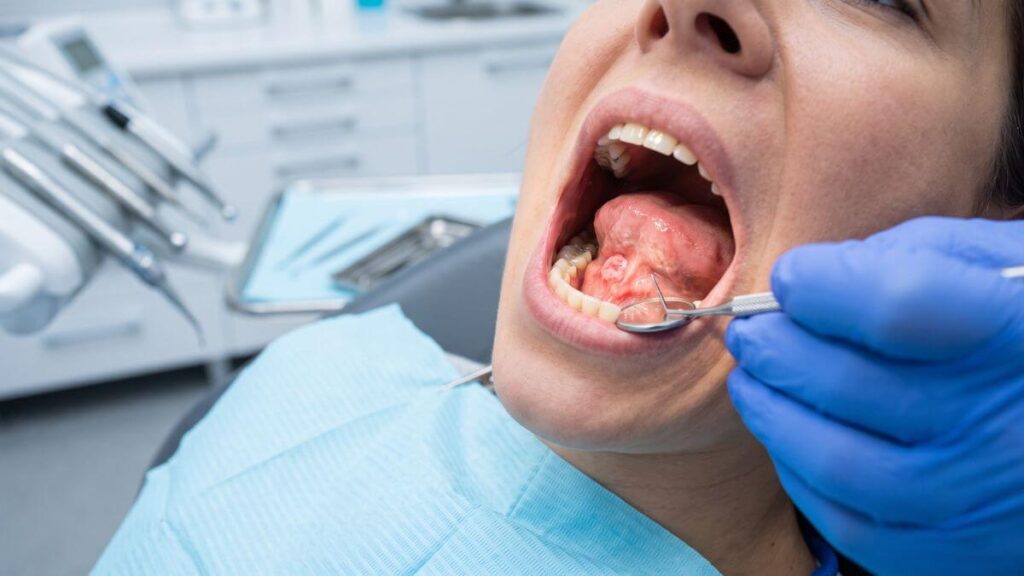
Some patients describe the concern as a tumor under the tongue, while others notice discomfort, swelling, difficulty moving the tongue, or a firm area that feels different from surrounding tissue. At Love Your Jaws, we evaluate these changes carefully and recommend biopsy or imaging when needed to determine the exact diagnosis.
What Are the Early Signs and Symptoms of Floor of the Mouth Cancer?
The earliest symptoms can be subtle. Some patients notice irritation under the tongue, while others see a red or white area, a persistent ulcer, or a small lump. Because early lesions may not cause severe pain, patients sometimes delay evaluation.
Common early signs of floor of mouth cancer may include a sore beneath the tongue, unexplained bleeding, a firm mass, pain while swallowing, numbness, difficulty moving the tongue, or a change in speech. An ulcer on the floor of the mouth not healing should be professionally evaluated if it lasts longer than two weeks, especially if it presents as a persistent mouth ulcer.
A floor of mouth lesion red patch may require prompt attention because red oral lesions can sometimes represent serious cellular changes, and white patches called leukoplakia can also indicate potential malignancy in the mouth. In some cases, hyperkeratosis floor of mouth malignant transformation may be a concern when thickened white tissue shows abnormal cells on pathology over time.
Patients may also experience dysphagia floor of mouth tumor symptom, which refers to difficulty swallowing, especially when the lesion affects tongue movement or nearby muscles. A fixed mass floor of mouth oncologist concern should be evaluated quickly because firmness or fixation can suggest deeper tissue involvement.
Patients searching for floor of mouth lesion evaluation in Miami often come to Love Your Jaws because they want timely answers from an experienced oral surgery team.
How Is Floor of the Mouth Cancer Diagnosed?
Diagnosis begins with a detailed oral examination, and a dentist or dental hygienist may be the first person to notice suspicious changes before referral. We evaluate the lesion’s size, color, borders, texture, firmness, mobility, depth, relationship to nearby structures under the tongue, and possible involvement of nearby tissue. We also assess tongue movement, swallowing symptoms, lymph nodes, salivary duct function, and the surrounding oral tissues, and patients should also be evaluated by a qualified health care professional.
When a suspicious lesion is present, a floor of mouth cancer biopsy may be recommended. During biopsy, a small tissue sample is removed and sent to a pathology laboratory for microscopic analysis. Patients searching for a floor of mouth biopsy doctor in Miami FL often need this step to determine whether the lesion is benign, precancerous, or malignant.
The floor of mouth biopsy pathology report provides essential information about the diagnosis and helps guide the next stage of care. Stage 0 may be called carcinoma in situ when abnormal changes are limited to the surface tissue. Advanced testing may also help diagnose mouth cancer in selected cases. If cancer is confirmed, additional imaging may be needed to evaluate tumor depth, jaw involvement, duct involvement, nerve involvement, and lymph nodes.
Cancer staging is also critical. Floor of mouth cancer staging helps determine how advanced the disease is and whether it has spread. Early stage disease may be treated more directly, while advanced stage disease often requires more complex planning. In some cases, doctors evaluate possible Sublingual gland tumor invasion, Wharton’s duct oral cancer obstruction, or lingual nerve involvement oral cancer. When disease spreads to the neck, floor of mouth cancer lymph node metastasis may influence treatment planning.
Patients seeking oral oncology second opinion in Miami can trust Love Your Jaws for careful evaluation, biopsy guidance, and coordinated referral when multidisciplinary cancer care is needed.
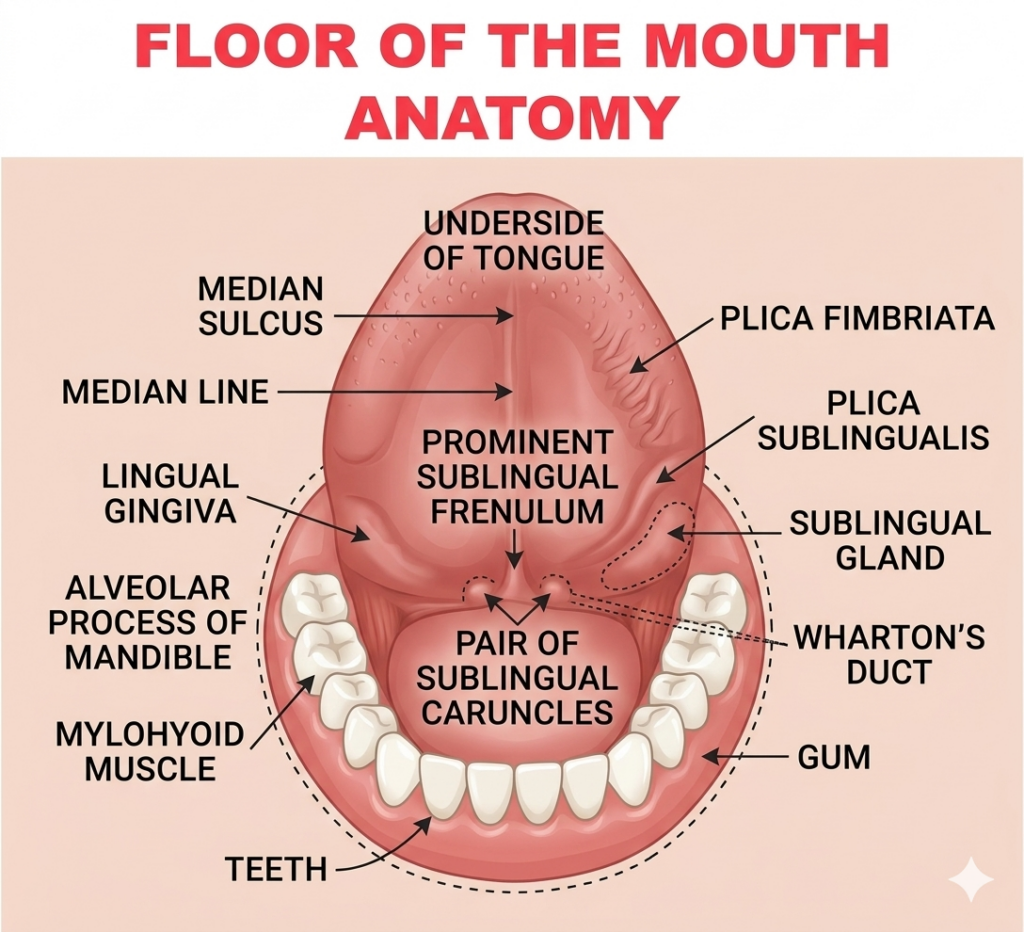
Biopsy: A small tissue sample is taken under local anesthesia to confirm the presence of squamous cell carcinoma.
3D CBCT Imaging: We use in-office 3D scans to see if the tumor has affected the nearby lower jawbone.
Advanced Imaging (MRI/CT): To determine the depth of the tumor and check for lymph node
Who Is at Risk for Developing Floor of the Mouth Cancer?
Floor of the mouth cancer can affect many patients, but it is more common in men, and people over age 45 are at higher risk. Tobacco use, smokeless tobacco, drinking alcohol heavily, chronic irritation, problems with the immune system, poor oral hygiene, and a history of precancerous oral lesions can all increase risk.
This area of the mouth is especially important in oral cancer screening because suspicious lesions may develop close to salivary ducts, glands, nerves, and the lower jawbone. Long-standing red or white patches, persistent ulcers, and unexplained masses should be evaluated without delay.
Patients with previous oral cancer, a history of leukoplakia or erythroplakia, or ongoing exposure to tobacco and alcohol should be especially careful, as leukoplakia can precede floor of mouth cancer in about 20% of cases. Early evaluation is critical because smaller lesions are often easier to diagnose, stage, and treat before they involve deeper structures.
At Love Your Jaws, we take a detailed medical and lifestyle history, examine the entire oral cavity, and evaluate the floor of the mouth thoroughly to determine whether biopsy, imaging, or specialist coordination is needed to help prevent floor of mouth cancer through early evaluation and risk-reducing lifestyle changes.
What Treatment Options Are Available for Floor of the Mouth Cancer?
Treatment depends on tumor size, depth, stage, pathology, lymph node involvement, and whether nearby structures such as the jawbone, salivary glands, or nerves are affected, and oral cavity cancer treatment varies with stage and site. At Love Your Jaws, we help patients understand the diagnosis and coordinate the appropriate treatment pathway with head and neck oncology specialists when needed.
Early localized tumors may be treated with resection of floor of mouth tumor, where the cancerous tissue is surgically removed with appropriate margins. After removal, margin status floor of mouth cancer is carefully evaluated by pathology to determine whether additional treatment may be necessary.
In more advanced cases, jawbone involvement may require mandibulectomy for floor of mouth cancer. Depending on the extent of disease, treatment may involve marginal mandibulectomy reconstruction when only part of the jaw edge is removed, or segmental mandibulectomy oral cancer when a larger section of jawbone must be removed. Care at this stage may involve a hospital-based team approach rather than just one doctor.
If lymph nodes are involved or at high risk, neck dissection floor of mouth carcinoma may be part of treatment. Additional therapies may include radiation therapy floor of mouth cancer, chemotherapy for floor of mouth carcinoma, or targeted therapy in selected advanced cases, depending on final staging and oncology recommendations.
Reconstruction is often an important part of care. A radial forearm free flap floor of mouth may be used to reconstruct soft tissue, while fibula free flap jaw reconstruction may be considered when jawbone reconstruction is required. Treatment for a soft tissue defect floor of mouth reconstruction is carefully planned with reconstructive specialists, including plastic surgeons when extensive defects are treated, to help preserve speech, swallowing, tongue mobility, and facial appearance.
Patients searching for a head and neck oncology floor of mouth specialist, oral oncologist for mouth tumor in Miami, sublingual tumor specialist in Miami Beach, or head and neck surgeon for under tongue tumor in Miami may begin with evaluation and biopsy at Love Your Jaws before coordinated cancer treatment planning.
What Is Recovery Like After the Floor of the Mouth Cancer Treatment?
Recovery after floor of the mouth cancer treatment depends on the size and stage of the tumor, the complexity of the surgical procedure, whether reconstruction was necessary, and if additional therapies such as radiation or chemotherapy are recommended. Because this region is closely connected to the tongue, lower jaw, salivary glands, and swallowing muscles, every treatment plan is carefully designed to preserve as much normal function as possible.
Immediately after surgery, patients commonly experience swelling, temporary discomfort, changes in speech, difficulty swallowing, and dietary limitations. During the first phase of healing, a soft or liquid diet may be recommended before gradually progressing to regular foods as healing allows. Our team provides detailed postoperative instructions and closely monitors each patient’s recovery to support optimal healing and reduce the risk of complications. After treatment, regular check ups are important to watch for recurrence and help manage ongoing side effects.
Patients undergoing more extensive procedures may also benefit from speech therapy, swallowing rehabilitation, nutritional counseling, and coordinated follow-up with oncology specialists. Our goal is not only to remove the cancer successfully but also to restore comfortable speech, eating, and overall quality of life.
What Is the Outlook for Patients with Floor of the Mouth Cancer?
The prognosis for floor of the mouth cancer varies according to several important factors, including tumor size, depth of invasion, lymph node involvement, pathology findings, and the overall health of the patient.
Patients diagnosed with stage 1 floor of mouth cancer generally have more treatment options because the disease is identified before it spreads into surrounding tissues or lymph nodes. This highlights the importance of evaluating persistent ulcers, masses, red or white patches, and any abnormal tissue beneath the tongue without delay.
Although many patients search online for the floor of mouth cancer survival rate, survival statistics can never predict an individual’s outcome. Long-term prognosis depends on early diagnosis, complete tumor removal, appropriate additional therapy when necessary, and consistent follow-up care. Early detection remains one of the most significant factors associated with successful treatment.
At Love Your Jaws, we emphasize timely diagnosis, expert surgical planning, and comprehensive postoperative monitoring to help every patient achieve the best possible outcome.
How Much Does Floor of the Mouth Cancer Treatment Cost in Miami?
The cost of floor of the mouth cancer treatment varies depending on the complexity of the diagnosis, imaging studies, biopsy procedures, pathology analysis, hospital services, anesthesia, surgical treatment, reconstruction, and whether additional oncology therapies are required.
Some patients need only biopsy and localized surgical removal, while others require more advanced surgery involving reconstruction, lymph node management, jaw surgery, or multidisciplinary oncology treatment.
Following your consultation, we provide a personalized treatment plan and explain every recommended procedure before treatment begins. Our team also discusses expected costs, insurance considerations when applicable, and the sequence of care necessary to achieve the safest and most effective result.
Because every diagnosis is unique, treatment recommendations are always tailored to the specific characteristics of each patient’s condition.
Which Miami Areas Do We Serve for the Floor of the Mouth Cancer Treatment?
Love Your Jaws proudly serves patients throughout Miami and South Florida from one state-of-the-art oral and maxillofacial surgery center. Although we operate from a single location, patients travel from surrounding communities because they value our advanced diagnostic expertise, personalized treatment planning, and comprehensive surgical care.
Floor of the Mouth Cancer Treatment in South Miami
Patients from South Miami trust our team for prompt evaluation of suspicious lesions beneath the tongue, oral biopsy procedures, surgical consultations, and individualized cancer treatment planning.
Floor of the Mouth Cancer Treatment in Coral Gables
Residents of Coral Gables choose Love Your Jaws for advanced oral pathology evaluations, precise biopsy techniques, and coordinated care focused on early diagnosis and successful treatment.
Floor of the Mouth Cancer Treatment in Brickell
Many patients from Brickell visit our practice for expert evaluation of persistent oral lesions, second opinions, and comprehensive oral cancer consultations performed by an experienced surgical team.
Floor of the Mouth Cancer Treatment in Key Largo
Patients from Key Largo frequently travel to our Miami office for specialized oral oncology evaluations, advanced biopsy procedures, and personalized surgical treatment planning.
Floor of the Mouth Cancer Treatment in Pinecrest
Residents of Pinecrest rely on Love Your Jaws for early diagnosis of suspicious floor of the mouth lesions and individualized oral cancer treatment recommendations designed to preserve oral function.
Floor of the Mouth Cancer Treatment in Fisher Island
Patients from Fisher Island appreciate our modern diagnostic technology, meticulous surgical planning, and compassionate approach to complex oral cancer care.
Floor of the Mouth Cancer Treatment in Coconut Grove
Many Coconut Grove residents choose our practice for thorough oral examinations, biopsy procedures, expert surgical consultations, and coordinated treatment planning for cancers affecting the tissues beneath the tongue.
Patients researching advanced cancer resources such as Sylvester Cancer Center floor of mouth oncology or University of Miami oral cancer reconstruction often begin with a comprehensive surgical consultation at Love Your Jaws to better understand their diagnosis and treatment options.
Why Choose Love Your Jaws for the Floor of the Mouth Cancer Treatment in Miami?
Treating cancer beneath the tongue requires exceptional surgical precision, extensive knowledge of oral anatomy, and careful coordination with oncology specialists. At Love Your Jaws, we combine advanced diagnostic technology, meticulous surgical techniques, and personalized treatment planning to provide comprehensive care for patients with floor of the mouth cancer.
Dr. Kroum Dimitrov is recognized by many patients as one of the leading oral surgeons in Miami, offering extensive experience in oral pathology, biopsy procedures, oral cancer surgery, and complex maxillofacial treatment planning. Every patient receives a thorough clinical evaluation, individualized recommendations, and compassionate guidance from the initial consultation through recovery.
Our practice emphasizes early diagnosis, precise biopsy techniques, evidence-based surgical planning, and preservation of speech, swallowing, tongue mobility, and facial appearance whenever possible. We also work closely with head and neck oncology teams, reconstructive surgeons, radiation oncologists, medical oncologists, and rehabilitation specialists whenever multidisciplinary care requires more than one specialist. Some patients are also co-managed for related head and neck or oropharyngeal cancers.
Whether you require biopsy, tumor removal, reconstructive surgery, or coordinated oncology treatment, our commitment remains the same—to provide safe, comprehensive, and compassionate care using the most advanced oral and maxillofacial surgical techniques available.
If you have noticed a persistent sore, lump, ulcer, red patch, white patch, or any abnormal tissue beneath your tongue that has not healed within two weeks, we encourage you to schedule an evaluation as soon as possible. Early diagnosis provides the greatest opportunity for successful treatment, preservation of oral function, and long-term health, and regular dental check ups can also support earlier detection. Love Your Jaws proudly provides comprehensive floor of the mouth cancer care for patients throughout Miami and South Florida.
FAQ
These are the 10 most valuable FAQ questions that complement (rather than repeat) the main content of a comprehensive “Oral Cancer Floor of the Mouth” service page. They target high-intent search queries, improve topical authority, and address concerns patients typically have before scheduling a consultation.
Yes. Floor of the mouth cancer has a relatively high risk of spreading to nearby lymph nodes because of the rich lymphatic network beneath the tongue. Even when the primary tumor appears small, microscopic cancer cells may already be present in the neck. During your evaluation at Love Your Jaws, we perform a comprehensive examination and advanced imaging to determine whether lymph node involvement is suspected. If necessary, neck surgery may be recommended as part of a personalized treatment plan to improve long-term outcomes.
The growth rate varies from patient to patient depending on the tumor’s biology, overall health, and how early it is detected. Some cancers develop slowly, while others become more aggressive over a relatively short period. Any ulcer, lump, or sore beneath the tongue that persists for more than two weeks should be evaluated promptly. Early diagnosis significantly increases treatment options and improves the likelihood of successful outcomes.
Many patients regain excellent speech and swallowing function following treatment, especially when the cancer is diagnosed early. Larger tumors may require reconstructive surgery and rehabilitation to restore normal oral function. At Love Your Jaws, every surgical plan is designed to remove the cancer while preserving speech, swallowing, tongue mobility, and overall quality of life whenever possible.
Yes. Like many forms of oral cancer, floor of the mouth cancer may recur after treatment. The likelihood depends on factors such as tumor stage, surgical margins, lymph node involvement, and whether additional therapies are required. Regular follow-up examinations allow us to detect any recurrence at the earliest possible stage, when additional treatment is often most effective.
If your biopsy confirms cancer, we develop a comprehensive treatment plan tailored to your diagnosis. Additional imaging may be performed to determine the exact stage of the disease before surgery is scheduled. Depending on your condition, treatment may include tumor removal, neck evaluation, reconstructive surgery, radiation therapy, chemotherapy, or a combination of these approaches. Our team guides you through every step of the process with personalized care and ongoing support.
Treatment depends on the stage and characteristics of the tumor. While radiation therapy, chemotherapy, immunotherapy, or targeted therapies may play important roles, surgery remains the primary treatment for many patients with localized floor of the mouth cancer. During your consultation, we determine the most appropriate treatment approach based on your diagnosis, overall health, and long-term treatment goals.
Yes. Continued tobacco use and heavy alcohol consumption substantially increase the risk of developing a second oral cancer or experiencing recurrence after treatment. Quitting smoking, reducing alcohol intake, maintaining excellent oral hygiene, and attending regular follow-up visits all contribute to improving long-term outcomes and overall health.
Follow-up care is an essential part of successful oral cancer management. During the first two years after treatment, visits are typically scheduled more frequently because this is when recurrence is most likely to occur. Over time, the interval between appointments may increase depending on your recovery and clinical findings. Every follow-up includes a careful examination of the surgical site and surrounding oral tissues.
Yes. You should schedule an evaluation immediately if you notice a sore beneath the tongue that does not heal, persistent pain, bleeding, difficulty swallowing, numbness, loose teeth without another explanation, a growing lump, red or white patches, or swelling inside the mouth or neck. Prompt evaluation can lead to earlier diagnosis and more conservative treatment options.
Love Your Jaws provides comprehensive care for patients with complex oral pathology and oral cancer using advanced diagnostic technology, individualized treatment planning, and modern surgical techniques. Dr. Kroum Dimitrov is recognized as one of Miami’s experienced oral surgeons, offering meticulous surgical care focused on complete cancer removal while preserving oral function, appearance, and quality of life whenever possible. From your initial consultation through recovery and long-term follow-up, our team is committed to delivering compassionate, patient-centered care tailored to your specific diagnosis.
Meet Dr. Kroum Dimitrov.
Professor's Cup Award recipient - recognized for academic and surgical excellence.
Dr. Dimitrov is one of the few dual-certified specialists in Miami-Dade - holding board certifications in both Oral & Maxillofacial Surgery (ABOMS) and Anesthesiology. This combination means a single trusted expert oversees every aspect of your care, from your first consultation through your recovery follow-up.
When you're at Love Your Jaws, you're treated by the doctor - not handed off to an associate or a rotating staff member. Every procedure - from a single wisdom tooth to a full-arch reconstruction - is personally performed by Dr. Dimitrov in our Miami surgery center.
- Board Certified by American Board of Oral and Maxillofacial Surgery (ABOMS)
Board Certified by National Dental Board of Anesthesiology (NDBA)
- Hospital privileges: Baptist Hospital · Doctors Hospital
- Trained: University of Miami / Jackson Memorial Hospital, Chief Resident
- AAOMS Member · ADSA Member