




5 out of 5 stars based on 700+ reviews
Intraoral Scanner: Say Goodbye to Goopy Dental Impressions
If you’ve ever had a dental impression taken the old way, you know the feeling – a tray full of cold, putty-like material pressed into your mouth, holding still while it sets, fighting the urge to gag, and praying the assistant doesn’t ask you to bite down one more time. This traditional process is known as taking conventional impressions, using conventional techniques that can be uncomfortable and sometimes less accurate.
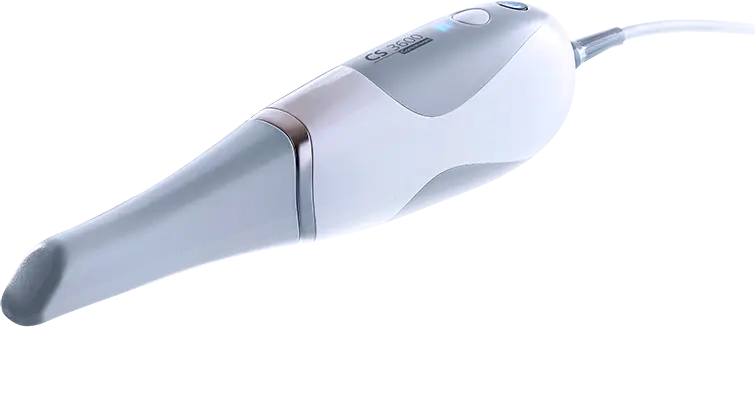
We retired that experience.
In its place, we use a state-of-the-art 3D intraoral scanner – advanced digital technology and essential equipment in modern dentistry. This pen-sized wand quickly captures a perfect digital replica of your teeth and gums in just a few minutes. No trays. No goop. No gag reflex. Just a smooth, comfortable scan and a stunning 3D model of your smile up on the screen seconds later.
What Is an Intraoral Scanner?
To begin the scanning process, an intraoral scanner is gently inserted into the patient’s mouth. This small, handheld device uses safe, harmless light and advanced imaging sensors – including a highly sensitive sensor inside the scanner – to capture thousands of high-resolution images of your teeth, gums, and bite. Powerful software stitches those images together in real time to create a precise, full-color 3D digital impression of your mouth.
The resulting 3D model is highly accurate, closely resembling your actual dental anatomy with minimal deviations—an essential factor for effective treatment planning. The scanner also creates an exact virtual map of your teeth, which can be used to custom-build clear aligners or track tooth movement over time.
That digital model is what your surgeon, dental lab, and specialists use to design crowns, bridges, veneers, implants, clear aligners, nightguards, and full-mouth restorations.
The scanner we use is among the most advanced in modern dentistry – wireless, calibration-free, and powered by an intelligent AI engine called CS ScanFlow that captures and aligns scan data in real time. It’s the same technology used by leading digital dental practices around the world.
How Does Intraoral Scanning Work?
The scanning process is genuinely simple, streamlined by advanced digital methods, and surprisingly fast. Digital methods not only improve patient comfort and hygiene but also make the workflow more efficient. The scanning process offers significant time savings compared to traditional impressions- a full-mouth scan typically takes just 2 to 5 minutes.
1. A Quick, Comfortable Scan
Your dentist or hygienist gently moves the wand around your teeth, capturing images as they go. There’s no pressure, no taste, and no need to hold still for long stretches. Most full-mouth scans take just two to five minutes
2. AI-Powered Real-Time Mapping
As the scanner moves, its built-in intelligent alignment engine stitches the thousands of images together on the fly. You can actually watch your 3D smile appear on the monitor in real time – patients (and kids especially) love seeing this.
If a spot needs to be re-scanned, we just glide back over the area. No “let’s redo the whole thing” moments like with traditional impressions.
3. Instant Digital File Transfer
Once the scan is complete, the digital model is sent, instantly and securely – to whichever lab, specialist, or in-office milling unit needs it. There’s no shipping, no waiting on couriers, and no risk of an impression getting damaged in transit.
4. Faster, Better-Fitting Restorations
Because the digital impression is accurate down to the micron, the crowns, aligners, and restorations made from it fit better the first time. That means fewer adjustments at follow-up visits and a more comfortable result.
Types of Dental Intraoral Scanners
Dental intraoral scanners come in several types, each harnessing unique technology to capture highly accurate digital impressions of your teeth and gums. The most common types include laser-based triangulation scanners, parallel confocal imaging scanners, accordion fringe interferometry (AFI) scanners, and trinocular HD video camera scanners.
Laser-based triangulation scanners use a laser light source and require a thin layer of opaque powder on the teeth to ensure consistent light reflection. This method helps the scanner’s camera accurately map the contours of your teeth, resulting in precise digital models.
Parallel confocal imaging scanners utilize a special pinhole filter to block out-of-focus light, allowing only sharp, focused images to be captured. This technology enhances the accuracy of the scan, especially in areas with complex anatomy or varying depths.
Accordion fringe interferometry (AFI) scanners project a patterned light onto the teeth and analyze the way the pattern deforms over the surface. This method is particularly effective for capturing fine details and subtle variations in tooth structure.
Trinocular HD video camera scanners use high-definition cameras to rapidly capture thousands of images per second, which are then stitched together by advanced scanning software. These scanners are known for their speed and ability to create full-color, lifelike digital impressions.
Each type of dental intraoral scanner offers distinct advantages, but all are designed to deliver exceptional accuracy, comfort, and efficiency. By understanding the technology behind these devices, dental professionals can select the best scanner for each patient’s needs, ensuring optimal results and a superior digital dentistry experience.
Why Patients Love Digital Impressions with Intraoral Scanners
The benefits of an intraoral scanner aren’t subtle. From the moment we replaced traditional trays, our patients noticed how digital methods improve patient comfort, streamline workflow, and enhance hygiene standards.
No more goop, no more gagging. The number-one complaint about traditional impressions is the messy material and the gag reflex it triggers. Digital scans eliminate both.
Faster appointments. A scan that takes 3 minutes used to take 15 – plus another 5 of waiting for the material to harden.
Comfortable for sensitive patients. Children, patients with strong gag reflexes, and anyone with dental anxiety find digital scanning dramatically easier to tolerate.
Better-fitting restorations. Higher accuracy means crowns, bridges, and aligners that fit right the first time, with fewer “come back in for an adjustment” visits.
You can see your smile in 3D. We can rotate, zoom, and explain your treatment using a live model of your actual teeth, greatly improving patient communication. Digital models help you visualize and understand your care plan, making treatment explanations clearer and increasing your involvement.
Higher hygiene standards. The scanner is designed for infection control from the ground up (more on that below) – a huge benefit in a post-pandemic world.
No retakes for storage. Digital impressions are stored securely on our system. If we need to reference your bite a year later, we don’t have to scan you again.
Enhanced endodontic procedures. Intraoral scanners are also utilized in endodontics to enhance procedural accuracy by integrating with advanced imaging systems, allowing for detailed visualization of complex dental anatomy during treatments.
All these benefits make intraoral scanners an essential tool for any modern dental practice.
Hygienic by Design: A New Standard in Patient Safety
Our intraoral scanner sets a new benchmark for patient protection and infection control. Every detail has been engineered with hygiene in mind:
- Closed, autoclavable scanning tip – fully sterilizable between every patient
- Sealed sapphire-glass window – scratch-resistant, easy to clean, no crevices for bacteria
- Ultra-thin single-use sleeves – a fresh barrier for every patient, every time
- Sealed body with minimal openings – wipes clean in seconds, with nowhere for contaminants to hide
For our team, this means we can deliver the highest level of cleanliness with every scan. For you, it means peace of mind.
Chair Time Reduction with Intraoral Scanners
One of the most significant benefits of digital dental scanners is the dramatic reduction in chair time for patients. Traditional impression techniques, which rely on bulky impression trays and goopy materials, can be uncomfortable and time-consuming- often requiring patients to sit still for extended periods while the material sets.
In contrast, intraoral scanners streamline the entire process. The digital impression is captured in just a few minutes, eliminating the need for multiple tries or waiting for materials to harden. This not only enhances patient comfort but also allows dental professionals to focus on more complex aspects of treatment planning and care.
By reducing chair time, intraoral scanners make appointments more efficient for both you and your dental team. The quick, accurate digital impressions mean less time spent in the dental chair and more time dedicated to discussing your treatment options, reviewing digital models, and ensuring you understand every step of your care. This efficiency extends to the creation of orthodontic appliances, surgical guides, and dental restorations, all of which can be designed and fabricated faster thanks to the digital workflow.
Ultimately, the integration of intraoral scanners into modern dental practices leads to a smoother, more comfortable experience for patients and a more productive, streamlined process for dental professionals.
Ergonomic Excellence – Why It Matters for You
The scanner is wireless, pen-grip, and one of the smallest and lightest on the market (around 10 ounces – about the weight of a baseball). Why should you care about how it feels in our hands?
Because a comfortable scanner means a comfortable scan for you. Smaller wand = easier maneuvering in your mouth. Lighter weight = steadier, gentler movements. Wireless = no cables bumping your face. The result is a faster, smoother, less invasive experience from start to finish.
What Can an Intraoral Scanner Be Used For?
- Crowns, bridges, and veneers – for restorations that fit beautifully the first time; digital impressions from the intraoral scanner can be sent directly to a milling machine for efficient and precise fabrication.
- Clear aligners (Invisalign and similar) – for precise, comfortable orthodontic treatment
- Dental implants – for accurate planning, placement, and final restoration
- Nightguards and sports mouthguards – custom-fit without the messy mold
- Dentures and partials – more accurate, more comfortable, faster turnaround
- Bite analysis and treatment planning – see how your teeth come together in 3D
- Smile design and case presentations – visualize your treatment before you commit
Intraoral scanners integrate seamlessly with other digital dental systems, such as CBCT and CAD/CAM systems, to streamline diagnosis, treatment planning, and workflow efficiency.
Intraoral scanners can also be classified based on the imaging technology they use, including laser triangulation, parallel confocal imaging, accordion fringe interferometry, and 3D in-motion video imaging.
Orthodontic Applications of Intraoral Scanners
Intraoral scanners have transformed orthodontic care by providing highly accurate digital impressions and detailed digital models of your teeth and bite. For patients considering clear aligners, retainers, or other orthodontic appliances, this technology offers a faster, more comfortable, and more precise alternative to traditional methods.
With digital impressions, orthodontists can diagnose issues like malocclusion, crowding, and spacing with greater accuracy. The scan data is used to create custom-fit clear aligners and retainers, ensuring a snug, comfortable fit and more predictable treatment outcomes. The speed of digital scanning means fewer appointments and less time spent in the chair, while the accuracy of the digital models reduces the need for repeat impressions or adjustments.
Additionally, the digital files generated by intraoral scanners can be easily shared with dental laboratories and other specialists, streamlining communication and collaboration throughout the treatment planning process. This digital approach not only improves the quality and efficiency of orthodontic care but also enhances the overall patient experience—making it easier than ever to achieve a straighter, healthier smile.
Digital Workflow Integration
The true power of intraoral scanners is unlocked when they are seamlessly integrated into a digital workflow. This means connecting the scanner with advanced computer aided design (CAD) software, milling machines, and 3D printers to create a fully digital process from start to finish.
With digital workflow integration, dental professionals can use the scan data to design precise digital models, plan complex treatments, and manufacture restorations or orthodontic appliances with unmatched accuracy. The digital files can be instantly shared with dental technicians, specialists, and even patients, enabling better communication and collaboration at every stage of treatment.
This streamlined approach not only improves the accuracy and quality of dental care but also enhances patient satisfaction by reducing turnaround times and minimizing errors. By adopting digital workflows and leveraging the benefits of intraoral scanners, practices like Love Your Jaws can deliver cutting-edge treatment, greater comfort, and superior results—keeping you at the forefront of modern digital dentistry.
Conventional Impressions vs. Digital Scanning
| Traditional Impressions (Conventional) | Digital Intraoral Scan | |
|---|---|---|
| Comfort | Goopy material, gag reflex | Pleasant, no taste, no pressure |
| Time | 10–20 minutes per impression | 2–5 minutes for a full scan |
| Accuracy | Subject to material distortion | Micron-level precision |
| Retakes | Often required, full redo | Quick rescan of one area |
| Storage | Physical molds, can degrade | Permanent, secure digital file |
| Transfer to lab | Shipping required | Instant, digital |
| Patient experience | Often unpleasant | Genuinely easy |
While digital intraoral scanners offer significant advantages in comfort, speed, and accuracy over conventional impressions, conventional methods remain important for certain complex cases – such as patients with restricted mouth opening, excessive saliva, or extensive restorations – where digital scanning may be challenging. Additionally, clinicians should be aware of the learning curve associated with adopting intraoral scanners and digital technology, as experience and training are key to seamless integration into clinical practice.
Frequently Asked Questions
Yes. The scanner uses harmless, low-intensity visible light — no radiation, no heat, no discomfort. It’s safe for adults, children, and patients with sensitivities.
Not at all. There’s no pressure on your teeth or gums. Most patients describe the sensation as similar to having a small toothbrush gently moved around their mouth.
Most scans take between two and five minutes for a full arch. Compared to traditional impressions, you’ll be in and out before you know it.
More accurate, in most cases. Modern intraoral scanners capture detail at the micron level, and the AI-powered software automatically corrects for any movement or misalignment as we scan.
Yes – digital scans are the gold standard for clear aligner therapy. They give the lab a precise model of your teeth, which means better-fitting trays and more predictable results.
Yes. Your digital impression is stored securely in our system, so if you need a future restoration, replacement nightguard, or treatment update, we often don’t need to rescan.
Insurance coverage applies to the procedure (the crown, aligner, etc.) – not to the impression method. So if your treatment is covered, the use of a digital scanner doesn’t change that.
Experience the Future of Dental Impressions
The days of gooey trays and gag reflexes are over. Our intraoral scanner makes every appointment faster, more comfortable, and more precise – and gives you a level of clarity into your own treatment that traditional dentistry never could.
Schedule your appointment today and see what modern, digital, no-goop procedure feels like.
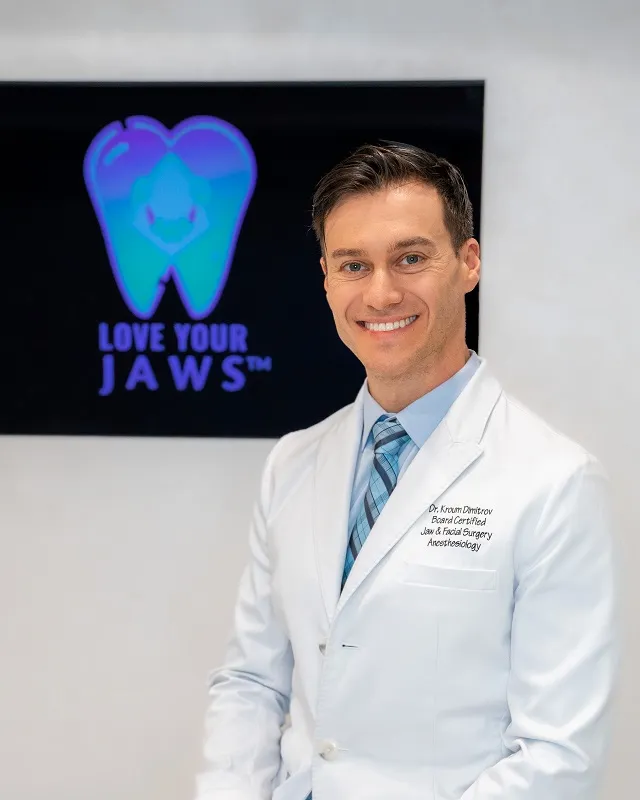
Meet Dr. Kroum Dimitrov.
Professor's Cup Award recipient - recognized for academic and surgical excellence.
Dr. Dimitrov is one of the few dual-certified specialists in Miami-Dade - holding board certifications in both Oral & Maxillofacial Surgery (ABOMS) and Anesthesiology. This combination means a single trusted expert oversees every aspect of your care, from your first consultation through your recovery follow-up.
When you're at Love Your Jaws, you're treated by the doctor - not handed off to an associate or a rotating staff member. Every procedure - from a single wisdom tooth to a full-arch reconstruction - is personally performed by Dr. Dimitrov in our Miami surgery center.
- Board Certified by American Board of Oral and Maxillofacial Surgery (ABOMS)
Board Certified by National Dental Board of Anesthesiology (NDBA)
- Hospital privileges: Baptist Hospital · Doctors Hospital
- Trained: University of Miami / Jackson Memorial Hospital, Chief Resident
- AAOMS Member · ADSA Member